The first conversation is thirty minutes, costs nothing, and ends with a written recommendation — whether or not you hire us. First conversation: 30 minutes, no cost.
Government & organizational solutions
Built tobe audited
Public-sector work has a second audience — the person who has to defend the purchase. We design for both of them: the team who has to change, and the file that has to hold up.
- Entity
- Texas LLC
- Scope
- Written before start
- Handover
- Train-the-trainer available
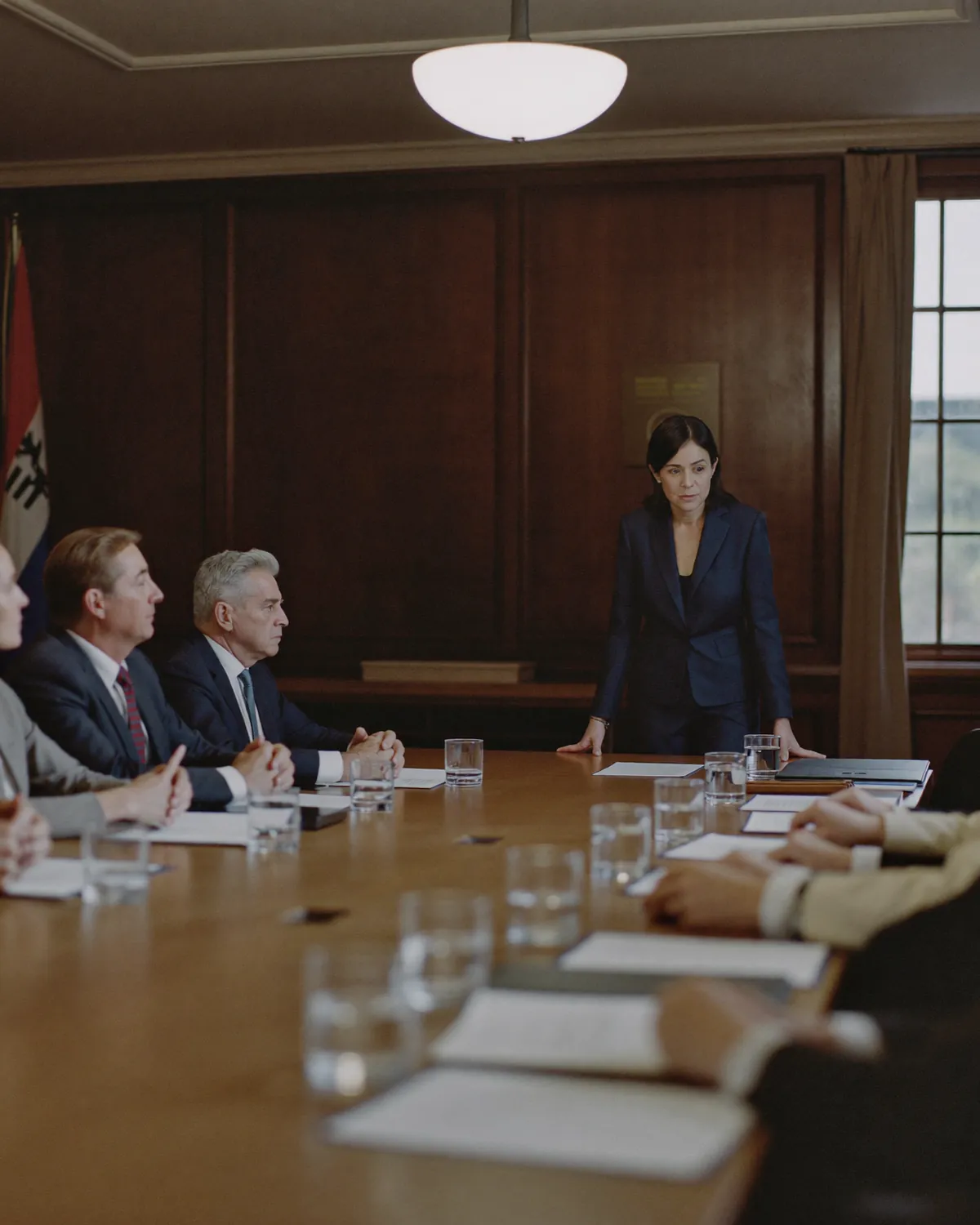
Where we fit
Workforce development that survives a change of leadership
The programs that fail are the ones that lived in one champion's calendar.
Agencies and large organizations do not lack training budgets. They lack continuity — a program is bought, it works, the sponsor moves, and eighteen months later nobody can find the materials or remember the cadence.
So we build for the handover first. Every deliverable is written to be run by somebody who was not in the original room, the scope names the internal owner from day one, and the closing debrief is addressed to whoever inherits the work rather than to the person who signed for it.
-
Documented scope
Deliverables, dates, dependencies, acceptance criteria, and an explicit list of what is not included.
-
Named internal owner
Agreed at scope, not at handover. The person who keeps it running is in the room from session one.
-
Procurement pack
Capability statement, references, insurance certificates and W-9 available on request.
How a public-sector engagement runs
Seven stages. The paperwork is part of the design rather than a step bolted on at signature.
- Enquiry 01 You describe the mission, the population and the constraint. No cost, no obligation.
- Discovery 02 Up to four interviews with the people who will be in the room, plus the sponsor.
- Written scope 03 Goals, format, dates, dependencies, acceptance criteria and exclusions.
- Procurement 04 Capability statement, references, insurance and any forms your process requires.
- Delivery 05 Sessions to the agreed cadence, with practice between them and three measured checkpoints.
- Handover 06 Facilitation guide and, where scoped, a train-the-trainer session for the internal owner.
- Close 07 A written debrief addressed to whoever inherits the work, not only to the sponsor.
Your side — 2 H2HC — 5
Stages 02 to 07 are the standard shape. Where your process requires a different order, we will follow yours — the sequence is a default, not a condition.
The second audience
Somebody has to defend this purchase in eighteen months
They will not be in any of the sessions. Everything we write is written so that person can pick it up cold and see exactly what was bought, what was delivered and what changed.
Request a proposalProgram shapes we are asked for most
Every one of these is customized. The names are here so you can recognise the shape, not order from a menu.
-
 Shape 01
 Supervisory leadership cohort
For newly promoted supervisors carrying a team for the first time.
8–12 weeks
-
 Shape 02
 Communication intensive
Briefing, feedback and difficult conversations, practised rather than described.
2–4 sessions
-
 Shape 03
 Succession and bench depth
Second-line leaders taking work the first line currently holds.
6 months
-
 Shape 04
 Team working agreement
One team, one written agreement about how it decides and recovers.
Half-day to 6 weeks
-
 Shape 05
 All-hands keynote
A single address for a whole department, written to your theme.
45–90 minutes
-
 Shape 06
 Executive coaching panel
Confidential one-to-one work for a defined group of senior leaders.
6 months minimum
If the shape you need is not here, it is still probably a scope conversation rather than a no.
Procurement questions
The five we are asked before anybody asks about content.
What is your entity and registration?
Hart 2 Heart Connection, LLC is a Texas limited liability company. Entity number, W-9, certificate of insurance and a capability statement are provided on request, before an RFP response if you need them for the file.
Can you respond to an RFP or RFQ?
Yes. Send the solicitation and the deadline. If we cannot meet a mandatory requirement we will tell you inside two business days rather than at submission, so you are not holding a slot for a bid that will not arrive.
Do you subcontract delivery?
Not by default. Where a program is larger than one facilitator can carry, additional facilitators are named in the scope before signature — never introduced quietly after it.
How is data handled?
Interview notes and session materials are held for the length of the engagement plus one year, then deleted. Individual attributions are never reported to a sponsor. If your policy requires something different, it goes in the scope.
What happens if the sponsor leaves mid-program?
The named internal owner continues, which is exactly why they are named at scope rather than at handover. If both leave, we pause rather than deliver into a vacuum, and we will say so in writing.
Proposals and RFP responses
Send us
the scope
A solicitation, a statement of work, or three paragraphs in an email — any of them is enough to start. We will come back with a fit assessment, a shape and a number.