The first conversation is thirty minutes, costs nothing, and ends with a written recommendation — whether or not you hire us. First conversation: 30 minutes, no cost.
How we help
Five waysto begin
Every engagement starts in the same place — a conversation about what is actually happening — and ends in the same place: something written down that outlives us. What changes is the shape in between.
- Formats
- Cohort, one-to-one, stage, custom
- Shortest
- A 45-minute keynote
- Longest
- A twelve-month program

Leadership is a practice, not a personality. Communication is most of the job. No team drifts into performance. Every engagement ends in writing. Heart first — then the hard part.
Practice 01
Leadership Development & Training
Cohort programs that turn capable managers into leaders people choose to follow.
Most organizations promote people for being good at the job and then leave them to work out leadership on their own. That is not a training gap. It is a design gap — nobody built the thing that was supposed to catch them.
A leadership lab runs a single cohort through the small number of skills that decide whether a manager becomes a leader: naming a decision, holding a hard conversation, giving feedback that lands, and reading a room before it goes quiet. Sessions are practice-heavy and small on purpose, because these are muscles and not memos.
-
Cohorts of 8–16
Small enough that nobody hides, large enough that people learn from each other rather than only from us.
-
Six to twelve weeks
Spaced sessions with work in between, because the practice happens at their desk, not in our room.
-
A facilitation guide you keep
Handed over at the close so the cadence survives without us in the room.
- Group size
- 8–16 participants
- Cadence
- Weekly or fortnightly
- Length
- 6–12 weeks
- Ends with
- Written cohort debrief

Practice 02
Executive Coaching
Confidential one-to-one work on the decisions that do not fit inside a meeting.
Senior roles get lonelier the higher they go. The questions that matter most — whether to keep someone, whether to say the thing, whether this is still the right seat — are exactly the ones with nobody safe to ask.
Coaching is that room. It is confidential from the first message, it is structured rather than therapeutic, and it is work: sessions have an agenda, commitments leave the room with the client, and progress is reviewed against something we agreed in writing at the start.
-
Confidential by default
Sponsors receive themes and progress against the agreed goals, never the content of a session.
-
A goal you can check
Set in session one, reviewed at three checkpoints, restated at the close.
-
Six-month minimum
Shorter than that and you are buying conversation rather than change.
- Cadence
- Fortnightly, 60 minutes
- Minimum
- Six months
- Between sessions
- Email access
- Sponsor reporting
- Themes and progress only


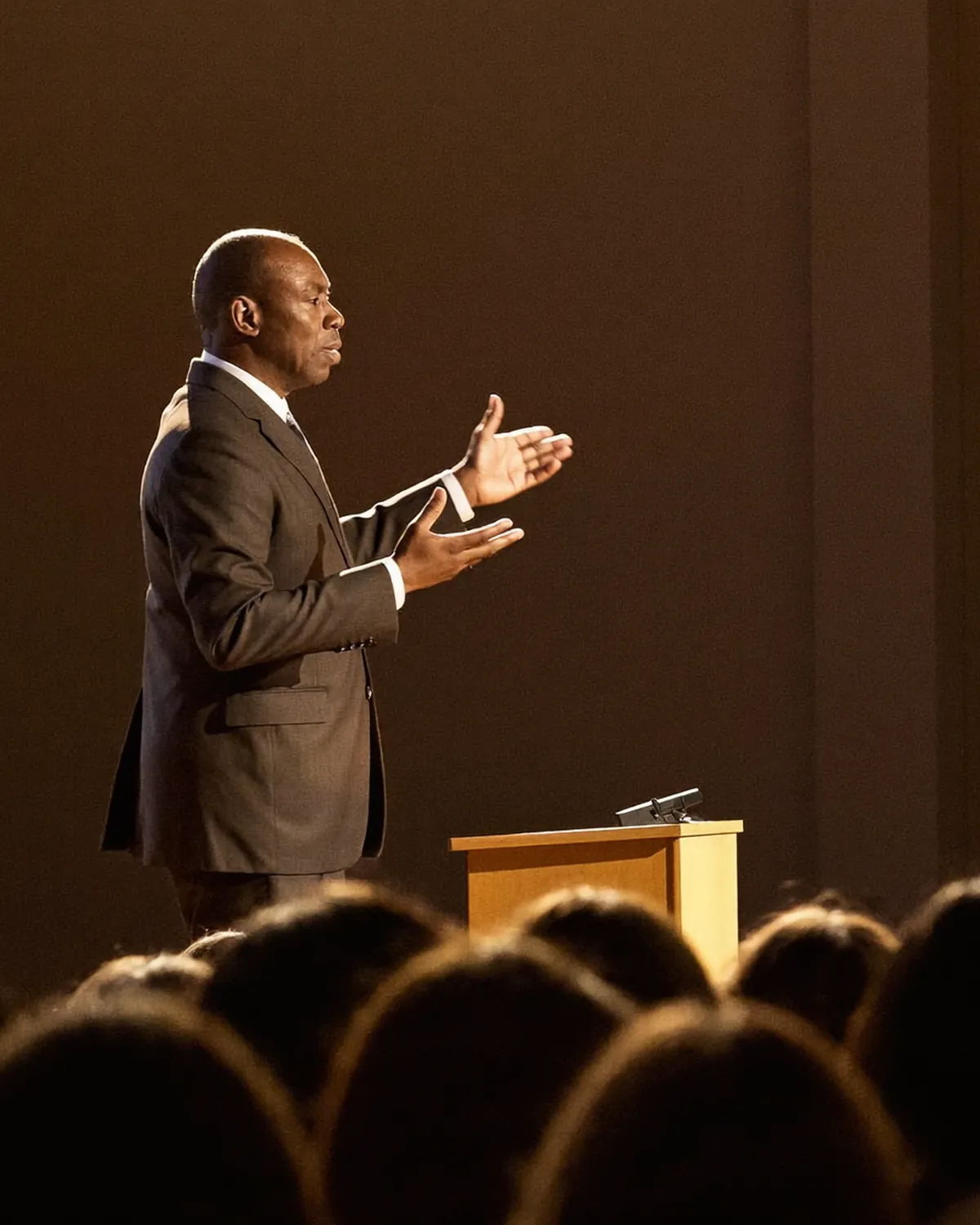
Keynotes and workshops
A room of eight hundred still changes one person at a time
A keynote earns the attention. The workshop is where it turns into something a team does on Tuesday. We would rather sell you both than half of one.
Book Eric to speakPractice 03
Keynote Speaking & Workshops
A keynote that moves a room, and a workshop that makes the movement stick.
A keynote is not a talk with slides. It is a piece of work with an argument, a shape and a single thing you want eight hundred people to carry into the parking lot. We write yours against your audience, your moment and your theme — not a stock deck with your logo dropped on the title card.
Where the schedule allows, we pair it with a workshop the same day or the next morning, while the room is still warm. That is when a keynote stops being an event and becomes something the team can use.
-
45–90 minutes on stage
Including Q&A, and rehearsed against your run of show rather than ours.
-
Workshops up to 200
Broken into working groups so it is practice and not a second keynote.
-
Written for your theme
One planning call, one draft, one revision — before anybody is in a room.
- On stage
- 45–90 minutes
- Workshop size
- Up to 200
- Lead time
- Six weeks preferred
- Travel
- Texas and nationwide
Practice 04
Team & Professional Development
Facilitated work on how a team actually communicates, decides and recovers.
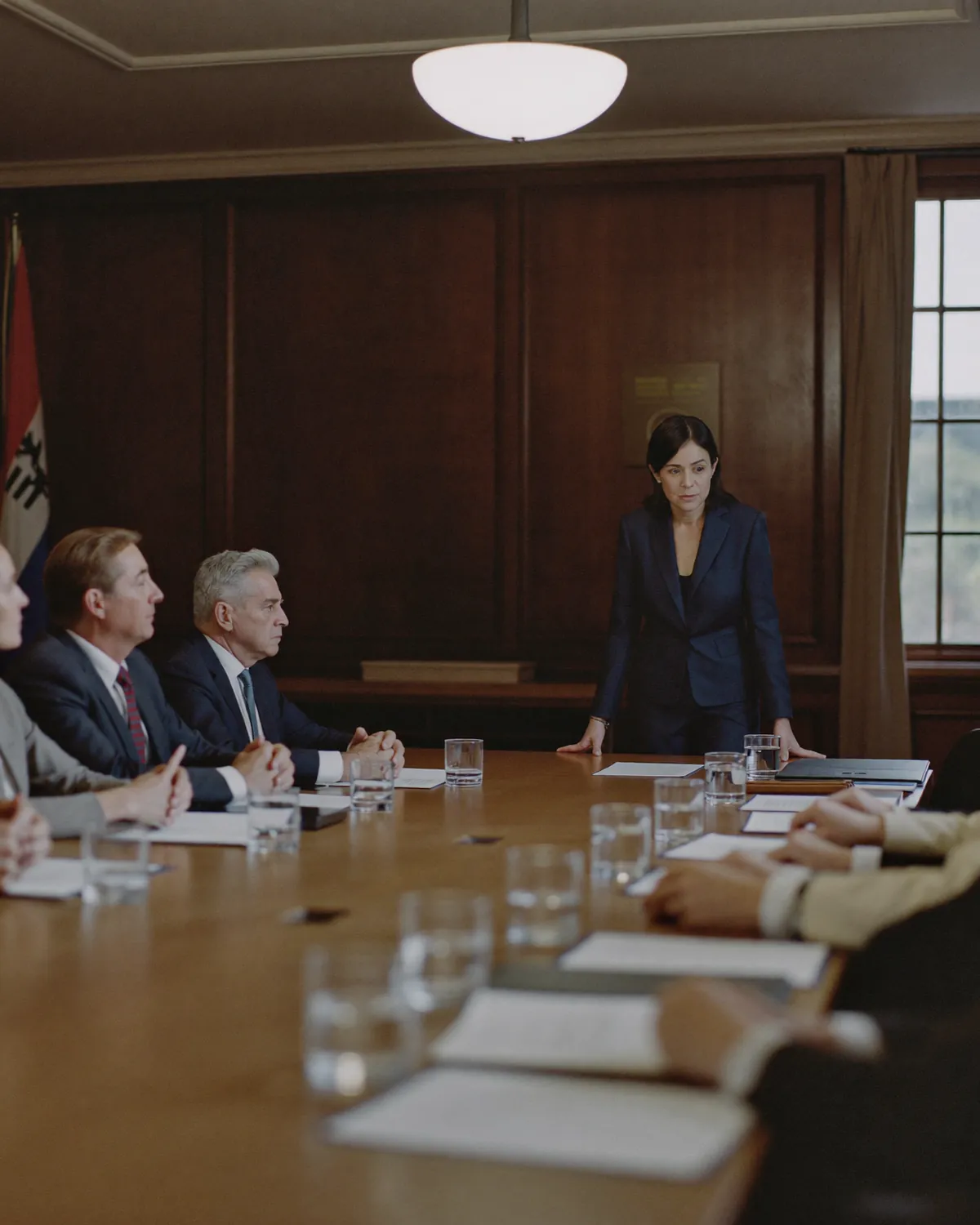
Teams rarely fail on capability. They fail on the unwritten rules — who speaks, who decides, what happens after a mistake, and whether disagreement is allowed to reach the surface before it reaches a resignation letter.
This is facilitated work on those rules, with the team in the room together. It ranges from a half-day reset to a twelve-week program, and it always produces the same artifact: an agreement about how this group works, written in their own words, that a new joiner can read on their first Monday.
-
Half-day to twelve weeks
Sized to the problem. A reset is not a program and we will say so.
-
The whole team, together
Including the manager. A team charter written without them is a wish list.
-
One written agreement
How this group decides, disagrees and recovers — in their language, not ours.
- Shortest
- A half-day reset
- Longest
- Twelve weeks
- Room
- The whole team, manager included
- Ends with
- A team working agreement

Practice 05
Government & Organizational Solutions
Scoped, documented programs built to survive procurement and outlast a contract.
Public-sector and large-organization work has a second audience: the person who has to defend the purchase. That work needs a scope somebody can read, deliverables somebody can check, and a handover that does not depend on the vendor still being there.
We build those programs the same way we build everything else, with the paperwork treated as part of the design rather than an afterthought bolted on at signature.
-
Documented scope
Deliverables, dates, dependencies and what is explicitly not included.
-
Built to hand over
Facilitation guides, session materials and a train-the-trainer path where the scope allows.
-
Procurement-ready
References, insurance and capability statements available on request.
Before you ask
The five things every prospective client asks second.
How much does it cost?
It depends on the shape and length, and we will not pretend otherwise on a web page. What we will do is give you a number in writing after the consultation, with the scope it is attached to, so you can compare it to something. No engagement starts without that document.
Do you work outside Texas?
Yes. We are based in Texas and travel for keynotes and intensives; cohort programs and coaching run remotely as a matter of course, and have since long before it was fashionable.
What if the wrong people are in the room?
That is a real risk and we would rather surface it in the consultation than in week three. If the people who can change the thing are not going to be in the room, we will say so and suggest a different engagement — or none.
Is coaching confidential from my employer?
Yes. A sponsoring organization receives themes and progress against the goals agreed at the start. It does not receive the content of a session, and we agree that in writing before the first one.
How quickly can you start?
A consultation, within a week. A keynote needs about six weeks of lead time to be written properly. A cohort program usually starts three to four weeks after scope is agreed.
Consultations are open
Start with
a real
conversation
Tell us who you are leading and what is not working. Thirty minutes, no cost, and you leave with a written recommendation whether or not you hire us.