What a keynote can and cannot do
An honest account of the ceiling on a speech, and what to pair it with if you want the room to change on Tuesday.
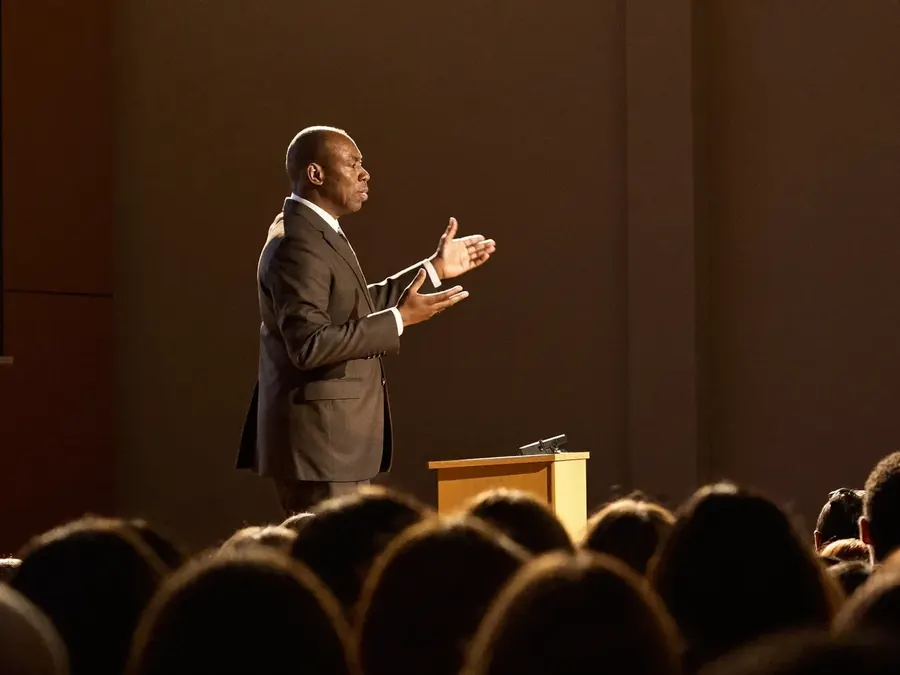
A keynote is very good at two things: making a shared idea available to a whole room at once, and giving people permission to say a thing they were already thinking. Both are real, and both are worth paying for.
What a keynote cannot do is build a skill. Nobody has ever become better at a difficult conversation by watching somebody describe one from a stage, however well it was described. Skill needs practice, feedback and a second attempt — none of which fit inside sixty minutes with eight hundred people.
The pairing
The most effective use of a keynote is as the opening move of something else. Speak to the whole organization in the morning, then run working groups in the afternoon or the next day, while the language is still shared and the room still remembers agreeing with it.
- Same day or next morning. A fortnight later, the energy is gone and you are starting again.
- Groups small enough to practise in. Twenty to twenty-five, not two hundred watching six volunteers.
- One thing to take away. A keynote that leaves people with four ideas leaves them with none.
And when a keynote alone is right
When the goal genuinely is a shared moment — a merger, a hard year, a new direction that needs to be said out loud to everyone at once — a keynote on its own is exactly the right instrument, and adding a workshop to it would be padding. We will tell you which one you are buying.